
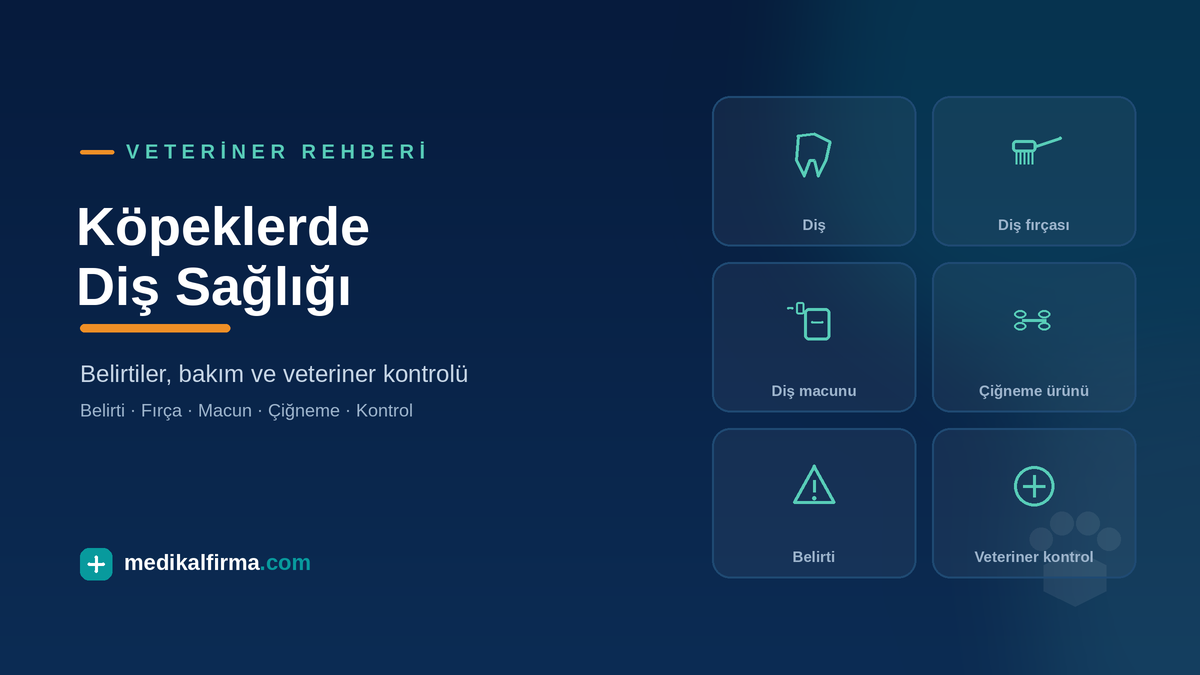
What does this guide cover?
Symptoms of dental and gum problems in dogs, plaque and tartar, at-home dental care, the role of nutrition and regular veterinary checkups; an informative care guide.
Dental health in dogs is an often-overlooked but important part of overall health. When dental care is neglected, plaque, tartar and gum problems can develop, which can cause both discomfort and affect overall health. This guide explains the symptoms of dental health issues in dogs, ways to care for teeth at home, and the importance of veterinary checkups. This content is for general information purposes only; a veterinarian must always be consulted for diagnosis and treatment.

Why is dental health important?
Oral health is not limited to the teeth alone; when neglected, it can affect the dog's appetite, comfort and overall condition. Regular care and observation help catch problems early. Changes noticed in the dog's mouth should not be taken lightly, and a veterinarian should be consulted when needed.
Symptoms of dental and gum problems
Certain symptoms suggest there may be an oral health problem. Recognizing them is important for seeking veterinary care in time.
Noticeable, persistent bad breath.
Yellowing, a brownish coating, or a tartar-like buildup on teeth.
Redness, swelling or bleeding of the gums.
Difficulty eating, refusing food, or chewing only on one side.
If one or more of these symptoms are observed, it is recommended to consult a veterinarian for evaluation.
How do tartar and plaque form?
Food residue and bacteria form plaque on the tooth surface over time; when plaque hardens, it turns into tartar. Tartar cannot be removed by brushing at home and can lay the groundwork for gum problems. For this reason, preventive care matters before problems progress. Removing tartar is a professional procedure and is assessed by a veterinarian.

At-home dental care
Regular at-home care is the most effective way to maintain dental health. A toothbrush and toothpaste made specifically for dogs are used; human toothpaste is not suitable for dogs. Getting the dog used to brushing gradually and patiently is important. Chew products that assist with dental care can also be supportive. Our grooming and care products guide provides guidance on care products and brushing, and our toy and chew products guide covers chew products.
Nutrition and dental health
Diet can also affect dental health. Some foods and chew products are said to provide mechanical support to the tooth surface. However, which diet is suitable varies according to the dog's age, breed and health condition, and is determined with veterinary advice. You can check our cat and dog food selection guide for general information on choosing food.
Veterinary dental checkups
At-home care is important, but it does not replace regular veterinary checkups. A veterinarian assesses the inside of the mouth and, when necessary, plans professional dental cleaning or other procedures. Checkup frequency varies according to the dog's age and condition; the veterinarian provides the most accurate guidance on this. Our veterinary clinic selection guide can help with choosing a clinic.
Building a regular care habit
The most effective approach to dental health is a regular, sustainable care habit. Turning brushing into a routine, using chew products in a balanced way, and monitoring changes noticed in the mouth are the foundation of preventive care. Problems caught early are generally easier to manage. Consulting a veterinarian is always the best approach for any concern about oral health. This article is for general information purposes only.
Frequently Asked Questions
How do I choose the right medical company?
Evaluate city, product/service, brand and company reliability together. On medikalfirma.com you can compare companies by city and contact them directly.
What is the difference between sales, rental and technical service?
Some companies sell products, some rent them, and some provide technical service/maintenance. These labels are shown separately on product and company pages; you can choose according to your needs.
How do I find companies in my city?
You can reach relevant companies by typing your city and the product/service you are looking for into the search box, or via the city pages.
Does this content replace medical advice?
No. The content is for informational purposes; consult your physician or the relevant specialist for health-related decisions.