
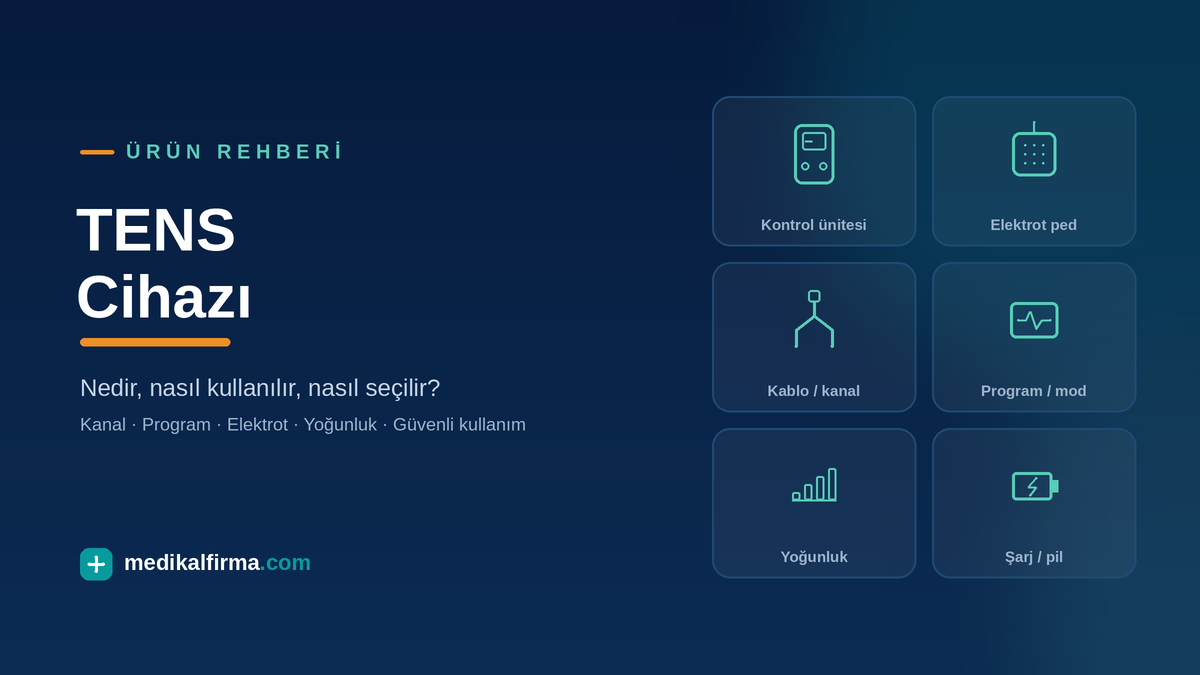
What does this guide cover?
How a TENS device works, its areas of use, the difference between TENS and EMS, channel-program-electrode criteria, and what to watch for safe use, all in one guide.
A TENS device is a device that provides nerve stimulation by delivering a low-level electrical current through electrodes attached to the skin. It is generally used to support pain management, on the recommendation of a physician or physiotherapist. This guide explains how a TENS device works, the criteria for selecting one, and what to pay attention to for safe use. This content is for general information purposes only; whether the device can be used and how it should be applied must always be decided by a physician.

How does a TENS device work?
TENS stands for transcutaneous electrical nerve stimulation. The device sends mild electrical pulses through electrode pads attached to the skin. These stimuli are said to potentially help reduce pain perception by affecting nerve signals. The device is not a curative method but a supportive product used under physician guidance; evaluating the underlying cause should always be the priority.
What is a TENS device used for?
TENS devices are mostly considered for muscle and joint related pain, lower back and neck complaints, or as support during physical therapy. However, in which situation, with which program and for how long it will be used varies from person to person, and this decision should be made by a healthcare professional. Using the device on the wrong area or at the wrong intensity may reduce the expected benefit.
The difference between TENS and EMS
TENS and EMS are often confused. TENS focuses on pain management through nerve stimulation, while EMS, or electrical muscle stimulation, targets muscle contraction. Some devices offer both modes. Clarifying which mode you need before purchasing makes it easier to choose the right device.
TENS device selection criteria
Several technical features stand out when choosing a device. The number of channels determines how many electrode areas can be stimulated at the same time. A variety of preset programs and modes accommodate different usage scenarios. Gradual and precise intensity adjustment is important for comfort. Whether the device is battery-powered or rechargeable, the readability of the screen and its portability also affect ease of use.
Number of channels: single or dual channel options.
Program and mode variety: for different usage needs.
Intensity adjustment: gradual and precise control.
Power source: battery-powered or rechargeable model.
Electrode (pad) maintenance and spare parts
The performance of a TENS device depends on the condition of the electrode pads. Pads lose their stickiness over time and need to be replaced. Keeping the pads clean, dry and properly stored extends their lifespan. When purchasing, the availability of spare pads and compatibility with the device's connection type should be checked. A worn pad or one with reduced stickiness both lowers comfort and can cause skin irritation.
Safe use and points to consider
A TENS device may not be suitable for everyone. People with a pacemaker or similar implant, pregnant women, and those with certain health conditions must consult a physician before using the device. Electrodes should not be applied over the heart area, the front of the neck, injured or irritated skin, or areas with numbness. The device does not replace investigating the cause of pain; a physician should be consulted for persistent or worsening complaints. Our guide on orthopedic support products offers complementary information for joint supports that accompany pain.
Choosing the right medical company
When buying a TENS device, the company profile should clearly state the brand, number of channels, program information, spare pad availability, warranty and technical service. Continuity of spare electrodes and accessories is important for long-term use of the device. In the medical company directory, you can compare companies in the same region using the city filter and product tags. You can also make use of our home patient care checklist to plan other products to be used at home together. This article is for general information purposes only; a physician or physiotherapist should be consulted for the decision to use it.
Frequently Asked Questions
How do I choose the right medical company?
Evaluate city, product/service, brand and company reliability together. On medikalfirma.com you can compare companies by city and contact them directly.
What is the difference between sales, rental and technical service?
Some companies sell products, some rent them, and some provide technical service/maintenance. These labels are shown separately on product and company pages; you can choose according to your needs.
How do I find companies in my city?
You can reach relevant companies by typing your city and the product/service you are looking for into the search box, or via the city pages.
Does this content replace medical advice?
No. The content is for informational purposes; consult your physician or the relevant specialist for health-related decisions.